Cultural Dislocation of Returned Captives
News of the WorldCultural Dislocation of Returned Captives describes the fracture that follows a forced return: a child may be delivered to relatives by birth yet remain estranged from the life imposed on them as a captive, and from the community that became their home. The novel makes that conflict concrete through Cicada, captured by the Kiowa at six and brought back four years later, while also tracing its effects in the changed behavior of Britt Johnson’s son and in the stories of other returned captives. Return is an administrative outcome, not proof of belonging restored.
The Conditions of Return
The process that brings Cicada to Jefferson Kyle Kidd begins not with a family reunion but with pressure from the Indian Agent. The Kiowa are told that unless they bring in captives, their rations will be cut off and soldiers sent after them. They comply, and Cicada is delivered in exchange for fifteen Hudson’s Bay four-stripe blankets and a set of German coin-silver dinnerware. The objects make the transaction plain: her transfer is treated as part of a political and material bargain, not as a choice she has made or a reconciliation between families.
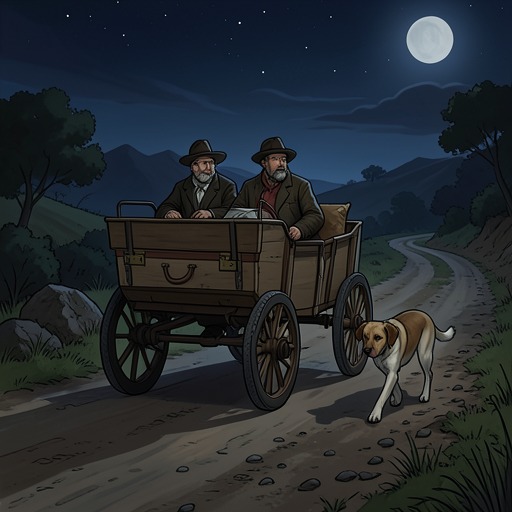
Britt Johnson reports that Cicada has already jumped from the wagon twice on the journey from Fort Sill. Agent Hammond’s particulars identify her as Johanna Leonberger, captured near Castroville at about six and now about ten. The four years between those ages are not an empty interval before she can resume an earlier identity. They encompass the life she has been living, and the novel presents the return journey as another rupture imposed on her.
The separation is painful on both sides. Britt says Cicada’s Kiowa mother cut her own arms and cried so loudly that she could be heard for a mile. The grief belongs to a relationship the authorities’ account of a white child being returned cannot make disappear. The narrative’s terms of kinship are therefore already divided: Cicada has Leonberger relatives by birth and a Kiowa family whose loss is embodied in the mother’s response.
Cicada’s Divided Identity
When asked about her family, Cicada names herself as Cicada, identifies her father as Turning Water and her mother as Three Spotted, and says she wants to go home. The words are Kiowa, but she does not speak them aloud. They remain in her head, where the language lives with its own tonal music. Her silence is not evidence that she remembers nothing; it marks the distance between what she can say in her own language and what the people around her can hear.
That distinction is missed by those who interpret her behavior from outside. Britt is cautious of the girl, and the men regard her as strange and potentially dangerous. Jefferson Kyle Kidd asks how Britt knows she remembers nothing. Britt explains that his son speaks Kiowa and was captive among the Kiowa for a year. The boy spoke with Cicada, but even this connection cannot make her interior life immediately legible to the adults who are deciding where she belongs.
Cicada’s attachment to the Kiowa is not only expressed in words. During a later confrontation with the Caddo, she moves barefoot among red sandstone slabs, uses a stove-lid lifter to lever up a sheet of rock, and helps bring down an enemy concealed below. After the danger passes, she raises a butcher knife and chants in Kiowa, celebrating the enemies’ flight in the language and manner of a people whose courage she claims as her own. The scene does not make her history simple: it shows that the identity others treat as an obstacle to return remains an active source of language, knowledge, and action.
The Signs of Dislocation
Britt’s son offers another measure of what captivity and return can leave behind. After less than a year with the Kiowa, he comes back changed. Roofs and enclosed places trouble him; he cannot settle down to learn his letters; fear gives way at times to arrogance. Britt does not explain the change, and the account does not reduce it to a diagnosis. Its force lies in the contrast between the boy’s former life and a return that has not made him feel settled or safe.
The brief story of Kiowa Dutch makes the uncertainty more stark. Blond-haired and unable to say where or when he had been captured, he is brought in by soldiers for return. He escapes from the men escorting him and remains with the Kiowa. His course differs from Cicada’s, but it exposes the limits of the authorities’ assumption that a captive’s place of origin determines where that person should live. The decision to return someone can be made even when the person’s own remembered history offers no clear path back.
Jefferson Kyle Kidd understands the danger of treating return as a cure. He recalls reports of Cynthia Parker and Temple Friend starving themselves after being returned to white relatives, and of other former captives who became alcoholics, solitary, or conspicuously unlike those around them. He thinks of them as people left restless and hungry for spiritual solace, abandoned by two cultures. His reflection shifts the issue from individual oddity to the conditions of a life divided between communities, neither of which can simply erase the other.
Kinship, Obligation, and the Unresolved Ending
As Cicada and Jefferson Kyle Kidd travel together, she is content and interested in the moving world around her. He wonders what will happen when travel ends and she is confined to the square house of her Leonberger relatives, a structure that cannot be broken down and carried on a travois. The contrast is not merely between a house and the open road. It sets a fixed, familial destination against the mobility and scale of the life she has been longing to rejoin.
At the Red River, Cicada sees a party of Kiowa across the flooded water. She calls to them in Kiowa, but the river is too loud and the distance too great for them to hear. The scene gives physical form to the separation: her people are visible, moving with their horses and children, yet the rising water prevents contact. Jefferson Kyle Kidd calls her, but she turns toward the far bank and calls for her parents, siblings, and life on the Plains. The moment is a failed crossing, not a reunion, and it shows why returning her to relatives by blood cannot by itself answer her longing.
Jefferson Kyle Kidd asks whether he can abandon her to those relatives after they have saved each other’s lives. He concludes that he must return her because they are her blood kin, though the decision pains him. His obligation is real, but so is his recognition that kinship by birth does not settle the question of where Cicada belongs. The novel leaves that contradiction intact rather than presenting the handover as a restoration of an undivided childhood.
The closing remembrance preserves the division in its own language. The Kiowa warriors live on in stories of their bravery and daring, and Cicada is remembered as the little girl taken from them by the Indian Agent, Three Spotted’s blue-eyed child. The description holds together the administrative fact of removal and the intimate relation of mother and daughter. Cultural dislocation thus persists beyond the journey: the return may change a child’s location, but the stories retain the ties and losses that official transfer cannot resolve.